
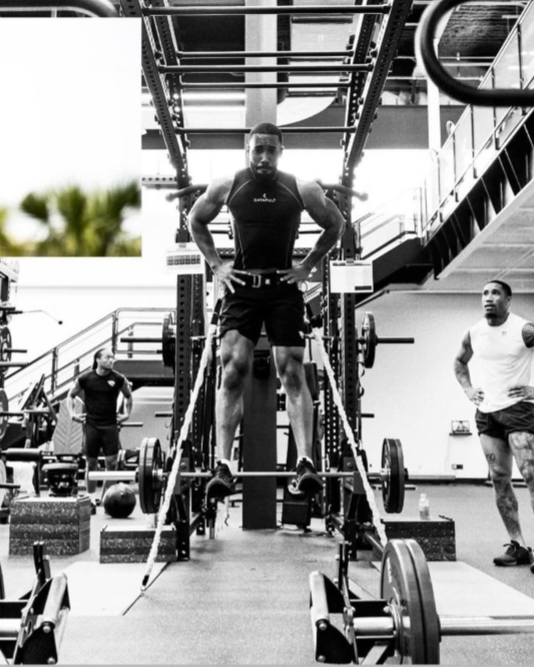
At Perform-X, we don’t treat confidence as a pep talk, we engineer it.
Just like strength or speed, confidence can be periodized, trained, and measured. Every set, every feedback cue, and every micro-win we create in the Perform-X system reinforces belief because confidence isn’t magic, it’s method.
The outcome?
Athletes who are stronger, faster, and more explosive but also calmer, more decisive, and unshakably sure when the game is on the line.
Why Confidence Drives Performance (Not the Other Way Around)
Confidence is one of the strongest predictors of performance across every level of sport. Athletes who believe in their preparation demonstrate greater strength, speed, agility, and execution. Confidence doesn’t follow success it creates it.
That belief is measurable. Pre-event self-efficacy, the conviction that you can execute before the competition even starts is a proven driver of performance. It’s not a personality trait; it’s a trainable skill that grows with structured, consistent feedback.
And where does that belief come from? From mastery experiences those tangible “I did it” moments that rewire your brain’s perception of capability. In the Perform-X system, those experiences happen daily: a new velocity record, a faster reactive jump, a cleaner deceleration. Every proof builds belief.
Mechanisms: How Training Builds Belief
When athletes hit targeted loads, bar speeds, or jump metrics, confidence spikes — and those spikes compound over time. Success feeds success.
Resistance training has been shown to reduce anxiety, allowing athletes to stay composed under pressure. At Perform-X, this means creating training environments that mimic game-time tension-controlled intensity that builds calm execution.
Confidence thrives on consistency. Pre-performance routines – brief, scripted physical and mental cues ground athletes in process, not outcome. In our rooms, a PPR is as standard as chalk: breath, cue, execute.
The Perform-X Way: Confidence by Design
We build confidence into every layer of the training process.
Session Flow with Feedback
Perform-X sessions pair targeted loading with instant feedback, bar velocity, cord tension, or jump metrics. When athletes see progress in real time, belief becomes tangible.
Resistance Systems That Teach
Our Trak-X platform, and cord systems don’t just challenge muscles they coach movement intent. They teach athletes to move fast, decelerate with control, and own every position, especially under fatigue. Every rep is a mental rehearsal for pressure moments.
What the Research Says
Across decades of sports science, the consensus is clear:
These findings validate what we see in Perform-X enhanced performance facilities daily: when athletes see progress, they start to believe and belief changes everything.
From the Weight Room to the Field
Every Perform-X enhanced performance facility is designed to give athletes something more than a number- evidence.
Evidence of growth, of control, of readiness. The kind that sticks when the lights come on and pressure hits.
Perform-X Takeaway:
Your training in our performance rooms aren’t just physical, every rep you own is a receipt your brain will cash in under pressure.
Sources & Resources
Perform-X
Perform-X
Perform-X
Perform-X